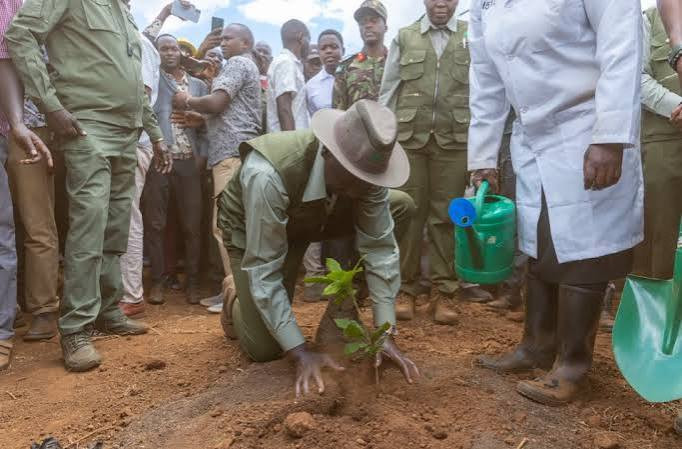
Kenya had recorded more than 2 billion trees on the JazaMiti platform by October 31, 2026, as the government prepares for the 2026/2027 rainy seasons and anticipated El Niño rains.
Forestry Principal Secretary Gitonga Mugambi gave the figures on Friday while appearing before the National Assembly Committee on Environment, Forestry and Mining, chaired by Baringo South MP Charles Kamuren.
According to Mugambi, the total stood at 2,009,058,558 trees since the national tree-growing programme was launched in December 2022.
The figure includes about 1.51 billion planted seedlings and an estimated 500 million trees that have grown through natural regeneration. A further 600 million trees across the country are yet to be recorded on the JazaMiti platform.
The government is targeting the restoration of 10.6 million hectares of degraded land and an increase in national tree cover to 30 per cent by 2032 under the National Landscape and Ecosystem Restoration Programme.
Mugambi told the committee that the State Department was working with the Kenya Forest Service, National Youth Service, Kenya Prisons Service, schools, government institutions and private nurseries to increase seedling production ahead of the coming rains.
The department is also working with the Ministry of Housing and the National Youth Service to renovate 300 existing Kenya Forest Service nurseries to improve their capacity to produce seedlings.
In a move to bring more people into the programme, the government has introduced a USSD service, *843*1532#, on the JazaMiti platform. The service allows people without smartphones to take part in the tree-growing initiative.
The programme has also seen 45 ecosystems adopted by different stakeholders, while aerial seeding is being carried out with support from the Kenya Defence Forces to reach degraded areas that are difficult to access.
The State Department is also seeking to involve 106,800 village elders in community tree-growing activities. Under the plan, each village is expected to grow 1,000 seedlings every month.
The elders will receive training in tree-growing, setting up nurseries, monitoring and reporting progress.
Mugambi said the assignment of annual tree-growing targets to ministries, departments and government agencies had resulted in more than 800 million seedlings being grown through the government-wide initiative.
The department asked MPs to support additional funding in the upcoming Supplementary Budget to finance aerial seeding and train the village elders expected to lead the community programme.
The funding request comes as the government prepares for the anticipated El Niño rains, which the department says could provide an opportunity to accelerate the restoration of degraded landscapes.
Mugambi appeared before the committee alongside senior officials from the State Department, Kenya Forest Service and Kenya Forestry Research Institute, including Forest Development Secretary George Tarus and KEFRI Chief Executive Officer Jane Njuguna.