The government has started reviewing Kenya’s National Environment Policy to bring it in line with the environmental challenges facing the country today.
The review comes 13 years after the current policy was adopted, with the government saying major changes in law, governance, climate and environmental conditions have made an update necessary.
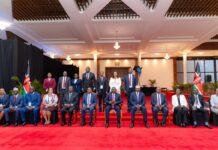
Principal Secretary for Environment and Climate Change Dr Festus Ng’eno on Tuesday opened a three-day Technical Working Group workshop being held in Machakos to review the policy.
The workshop, which runs from September 8 to 10, 2026, brings together officials from the national and county governments, development partners, civil society organisations and environmental experts.
The team is expected to review the Zero Draft of the revised policy and prepare recommendations that will guide the development of the First Draft.
Ng’eno said the 2013 policy no longer fully reflects the changes Kenya has gone through over the past 13 years.
He pointed to the implementation of devolution, changes in environmental law and the country’s growing focus on climate change, biodiversity and carbon markets as some of the developments that require the policy to be updated.
Kenya has also taken on new international commitments, including those under the Paris Agreement and the Kunming-Montreal Global Biodiversity Framework.
At the same time, the country has experienced more frequent and severe climate-related events, including droughts, floods and rising lake levels.
“A policy written for 2013 cannot competently govern us currently and in the next 10 years,” Ng’eno said.
He said the revised policy should be guided by the Constitution, take into account the role of county governments and respond to new environmental knowledge and challenges.
The review is based on an Environment Policy Gap Analysis and Needs Assessment carried out as part of the process. The assessment examined the 2013 policy against the country’s current legal, institutional, scientific and governance framework.
It highlighted those areas that require attention in the new policy, which include climate finance, the blue economy, and a just transition.
The process of review started in January 2026 with consultations between stakeholders from government, private sector, civil society, development partners and academia.
The recommendations of the consultations are being implemented by the Technical Working Groups.
The participants at the Machakos workshop have been grouped into three different groups that are considering the themes of climate change and natural resources; environmental quality and land; and governance, law and institutions.
Some of the issues that are expected to be looked at include climate change adaptation and mitigation, carbon markets, climate finance, forests, wetlands, biodiversity, pollution, waste and plastics.
They will also look at the blue economy, circular economy, land degradation, environmental rights, devolution, enforcement and financing of environmental programmes.
The groups will assess the Zero Draft and decide which sections should be retained, changed, removed or added.
The recommendations from the workshop will then be consolidated and used to guide the preparation of the First Draft of Kenya’s revised National Environment Policy.