The government has clarified that President William Ruto’s crackdown on undocumented foreign traders is not a blanket ban, announcing a formal registration window for undocumented East African nationals living in the country.
In a press statement issued on Monday, Government Spokesperson Charles Owino said the September 2 directive was aimed at regulating small-scale retail and informal trade in line with the proposed Local Content Bill, 2025, and was not targeted at foreign nationals as a group.
“The core intent of these measures is to protect vulnerable sectors of our domestic economy, safeguard local livelihoods, and maintain the integrity of our national identity systems,” Owino said.
The government acknowledged that a number of East Africans, including several Burundians, live in Kenya without full documentation, leaving them exposed to exploitation and harassment.
It has now opened a Documentation and Registration Window, urging affected nationals to present themselves to their embassies for registration.
“For the duration of this designated registration period, all individuals undergoing registration will be presumed legally present in the Republic of Kenya,” the statement read.
The Ministry of Foreign Affairs will work with the Embassy of Burundi and other regional partners to regularise cases.
Owino issued a stern warning against any harassment or discrimination targeting foreigners, saying security agencies and the public have been directed to leave documented nationals, and those undergoing registration,alone.
“Any elements seeking to exploit recent directives to fuel xenophobic sentiment or mistreat our neighbours will face the full force of the law,” he said.
The government maintains a policy of “absolute zero tolerance” toward any form of harassment, intimidation, or xenophobia.
Foreign Affairs Principal Secretary Korir Sing’Oei said on September 6 that Ruto’s remarks had been taken out of context.
He stressed that foreigners who satisfy Kenya’s legal requirements, including possessing the necessary work permits and licences, remain legally protected to operate businesses in the country.
“We assure that small or large traders and employees of all nationalities, with requisite documentation, like work permits and licences, are legally protected to operate in Kenya,” Sing’Oei said.
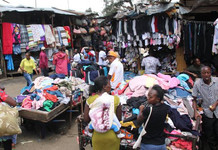
The directive specifically targets foreign nationals operating small retail shops and engaging in hawking, businesses Ruto said should be reserved for Kenyans.
On September 2, while addressing Micro, Small and Medium Enterprise traders at State House, Ruto directed that foreigners involved in hawking and petty retail should close their businesses, with enforcement beginning September 7.
The directive has triggered anxiety among foreign traders, with footage circulating online appearing to show nationals from Burundi, Rwanda, and the Democratic Republic of Congo leaving areas where they had been engaged in petty trade.
Long queues were seen outside Burundi’s embassy in Nairobi after it announced it would offer free emergency travel documents to citizens wishing to return home.
Burundi’s Foreign Affairs Minister Edouard Bizimana warned that “Kenyans in Burundi were living peacefully but if the hate speech against Burundi continues things will certainly change.”
Hundreds of Burundians gathered at their embassy in Nairobi on Monday to obtain laissez-passer documents following the crackdown.
The government also dismissed international coverage of the directives, singling out French newspaper Le Monde, which it accused of mischaracterising the measures as a blanket ban on foreign nationals.
“The Government of Kenya categorically rejects these mischaracterisations. Kenya’s commitment to the East African Community Common Market Protocol remains absolute and unwavering,” the statement read.
Trade Cabinet Secretary Lee Kinyanjui stressed that visa-free entry into Kenya does not automatically give foreign nationals the right to work, trade, or operate businesses in the country.
Foreigners engaging in employment, trade, or business must comply with immigration laws, work-permit requirements, and other applicable regulations.
The government has not provided a comprehensive public list of every type of business affected by the September 7 enforcement drive.