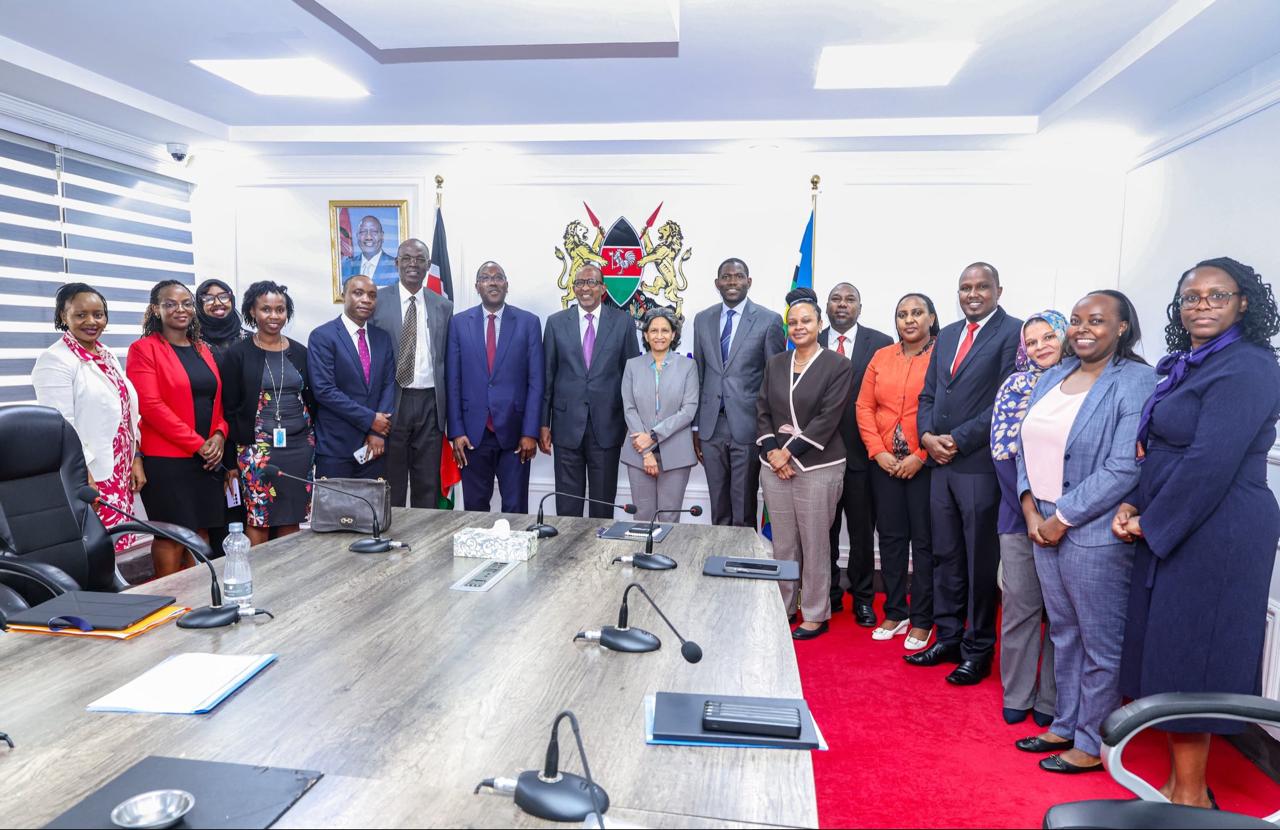
Health Cabinet Secretary Aden Duale has held talks with a World Bank delegation on plans to strengthen primary healthcare, digital health and local manufacturing of medical products in Kenya.
The delegation, led by World Bank Vice President for the People Vice Presidency Mamta Murthi, met Duale as the government continues implementing reforms under the Taifa Care programme.
The discussions also covered emergency preparedness, regulation of health products and efforts to improve healthcare services in underserved parts of the country.
Duale and the delegation reviewed the Building Resilient and Equitable Health Systems (BREHS) and Kenya Health Emergency Preparedness and Response Project (KHEPRR), which support health services across Kenya’s 47 counties.
The projects are also targeting underserved communities, including areas hosting refugees.
32.6 million Kenyans onboarded to SHA
Duale highlighted progress made under Taifa Care, saying 32.6 million people had been registered with the Social Health Authority (SHA).
He said 11,197 healthcare providers had also been contracted, with Ksh178 billion paid for services provided under the system.
The government and the World Bank also discussed plans to connect 2,500 health facilities in remote and underserved areas to improve access to health services and digital systems.
Another area of focus was strengthening the Pharmacy and Poisons Board, with Kenya seeking to move the regulator towards World Health Organization (WHO) Maturity Level 3.
The discussions further looked at increasing local production of health products and strengthening Kenya’s ability to manufacture essential medical supplies within the country.
Focus on maternal and newborn health
Duale also highlighted efforts to reduce preventable deaths among mothers and newborns.
The government is seeking to strengthen primary healthcare and improve access to timely treatment, particularly for communities that face challenges reaching specialised health facilities.
The CS said the government wants development partners to align their support with national health priorities rather than running separate programmes.
He reaffirmed Kenya’s commitment to the One Plan, One Budget and One Evaluation approach, which seeks to bring partner investments under a coordinated national framework and measure their impact on communities.
The engagement with the World Bank comes as Kenya continues to implement changes in healthcare financing and service delivery while seeking to build a health system that can better respond to emergencies and provide services closer to the people.