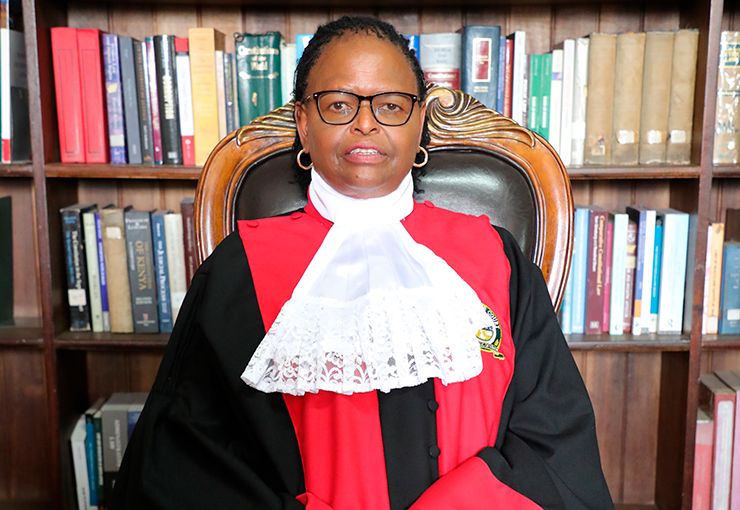
Chief Justice Martha Koome has publicly announced the appointment of 208 magistrates who will now handle particular types of cases in the Judiciary.
They include corruption case-related cases, economic crimes, land and environmental cases, and employment and labour disputes.
In an October 9th government notice, Koome named six magistrates who will handle only anti-corruption and economic crimes.
They are Victoria Achieng, Maureen Iberia, Janette Wandia, Christable Irene, Japheth Cheruiyot, and Wilson Kipchumba.
They will continue working from their current locations but can also be posted to other courts if need arises.
58 more magistrates have also been appointed to handle environmental and land cases in the country. Similarly, they’ll also work from where they are, but until now, with the exception of being transferred depending on where their services are needed most.
The largest cohort of 144 magistrates has been tasked with dealing with employment and labour cases. These will include cases involving employers and employees where the value of monthly remuneration involved does not surpass Ksh80,000.
The appointments, however, do not include trade disputes falling under the Labour Relations Act.
Koome drew on provisions of law in the Employment and Labour Relations Court Act in making the appointments, citing that the move is aimed at enhancing the processing of such cases to be more effective and swift.
This is barely two weeks since the Chief Justice named 129 judicial officers to work in small claims courts across the nation.
The officers will act as adjudicators informally judges in minor civil cases over smaller amounts of money.
The appointments of small claims courts commenced on September 1, 2025, and will last for a period of one year.
Appointed newly as adjudicators are Manuela Kinyanjui, Mercy Nkirote Kinyua, Dennis Nguli Kioko, Jacklyne Tawai Khalimesi, Jacinta Mwangi Wangeci, Philomena Nafula Makokha, Grace Mutemi, John Ogutu Ochieng, Larry Kombe Matawi, Lucy Gitari Wanja, and Victor Shivega.
Justice Koome clarified that these are in accordance with a broader strategy for improving access to justice for Kenyans through the reduction of the backlog of cases and expediting disposal in different fields of law.