The government has earmarked seven irrigation projects for implementation in Kitui County as part of efforts to boost food production and improve access to water in the semi-arid region.
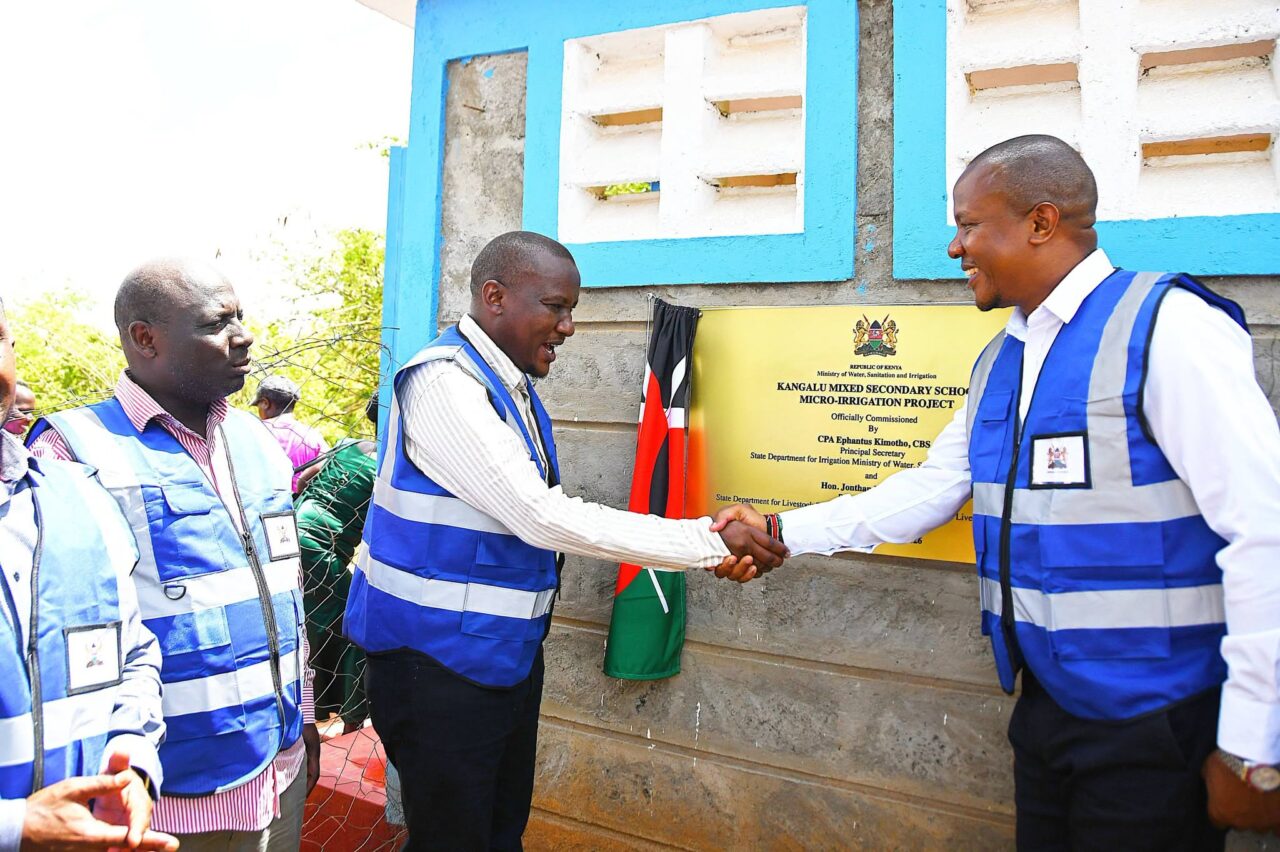
Irrigation Principal Secretary Ephantus Kimotho announced the plans on Friday, November 20, during the commissioning of the Kangalu Mixed Secondary School Micro-Irrigation Project in Mulango, Kitui Central Constituency.
Kimotho said the projects would be implemented under the Kenya Resilient Irrigation for Sustainable Economy (KRISE) Programme, alongside other investments in boreholes, water storage and irrigation infrastructure.
He also highlighted a proposed allocation of KSh60 million for borehole development in constituencies under the programme. The initiative will be complemented by the construction of dams and irrigation systems to support agricultural production.
The Kangalu project is among the interventions aimed at improving water access while promoting food security in schools and surrounding communities.
It features a 139-metre borehole, a solar-powered pumping system and a 20,000-litre water storage tank. It also has two greenhouses, a quarter-acre drip irrigation system and designated water points for learners and residents.
The facility is expected to benefit 1,421 learners from the primary and secondary school sections, as well as approximately 1,000 people in the surrounding community.
The project will allow learners to gain practical skills in crop production and irrigation management while enabling the school to grow fresh food for its needs.
Kimotho said reliable water sources were critical in unlocking agricultural potential, improving livelihoods and strengthening resilience in areas that depend heavily on rain-fed farming.
The government is also pursuing a broader plan to develop 1,250 dams across the country, comprising 50 large dams and 1,200 medium-sized dams, alongside smaller water-harvesting facilities.
During the event, Kimotho and Livestock Development PS Jonathan Mueke also distributed chicks and beehives to organised community groups to support household incomes and expand small-scale agricultural enterprises.