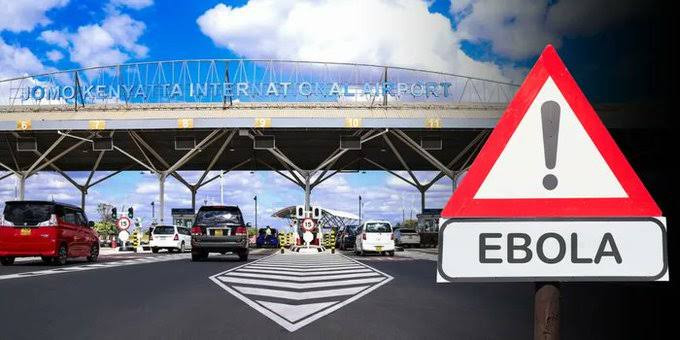
Kenya is keeping a close watch on the Ebola situation in the region after the United States, United Kingdom and four other countries raised concern over the risk of the disease spreading to South Sudan.
In a joint statement issued on Thursday, November 12, the embassies of Germany, Japan, the Netherlands, Norway, the UK and the US warned that the threat of an outbreak in South Sudan remained a concern.
South Sudan has not reported a case of the Bundibugyo strain of Ebola, but the World Health Organisation (WHO) has put the risk of the virus being imported into the country at 99 per cent.
The concern is linked to an ongoing outbreak in neighbouring Democratic Republic of the Congo (DRC), which shares an approximately 813-kilometre border with South Sudan.
By November 9, confirmed cases in the DRC had surpassed 10,900, raising fears that the disease could spread across the border.
The six countries said the situation should push South Sudan’s leadership to invest more public revenue in the health sector, including paying health workers.
They also called on the government to ensure humanitarian organisations can reach communities across the country and provide assistance to people in need.
South Sudanese authorities have been investigating suspected cases, including a patient who died from haemorrhagic fever in Morobo County.
Two blood samples from the patient tested negative for Ebola before the illness was confirmed as yellow fever on November 10. A separate alert in Yei was also awaiting laboratory confirmation in early November.
The developments are of concern to Kenya because of the movement of people between the two countries. South Sudan is an important market for Kenyan goods, with an estimated 800 to 1,500 people crossing the border daily.
Kenya is also in the process of completing a 42-day monitoring period following an Ebola outbreak that began with an imported case in October.
The country recorded nine cases, including the initial imported case, with two patients dying. The remaining patients recovered and were discharged from quarantine.
Health Cabinet Secretary Aden Duale said on Wednesday that the 42-day period was twice the longest incubation period of the virus.
He said Kenya would be declared free of Ebola on December 23, 2026, if no new infections were reported during the monitoring period.
The WHO has urged Kenya to maintain surveillance, screen patients in health facilities and strengthen laboratory capacity and the preparedness of health workers.
South Sudan is also among countries facing travel restrictions imposed by destinations including the US, Canada, Saudi Arabia and the United Arab Emirates over Ebola concerns.
The latest warning places further focus on the need for countries in the region to maintain surveillance and respond quickly to any suspected infections.