Fifteen politicians could be locked out of the 2027 General Election as government agencies tighten the noose on hate speech, ethnic incitement and inflammatory political rhetoric.
The warning was issued on Monday during a joint briefing bringing together the National Cohesion and Integration Commission (NCIC), the Independent Electoral and Boundaries Commission (IEBC), the Office of the Registrar of Political Parties (ORPP), the National Police Service (NPS), the Ethics and Anti-Corruption Commission (EACC), the Communications Authority (CA) and the Political Parties Liaison Committee (PPLC).
Speaking at the briefing, PPLC Chairperson Evans Omae said the agencies had agreed to take a tougher stance against politicians who violate the law during the campaign period.
“Some of the people you see here campaigning will not see the ballot because they will be disqualified. We have agreed with colleagues here that we must disqualify at least 15 people,” Omae said.
The warning comes amid growing concern over the rising use of divisive and inflammatory language at political rallies and across social media platforms, with authorities cautioning that such conduct could undermine national unity ahead of the 2027 elections.
In a joint statement, the agencies expressed concern that public discourse has increasingly been characterised by hate speech, ethnic intolerance and abusive political exchanges.
“‘Our public and digital fora abound with hate speech, ethnicity, insults, vulgar language and political intolerance that is not fit for print. If left unchecked, this worrying trend is taking our nation down an unacceptable path,'” the statement said.
In order to tackle this challenge, the authorities have set up a multi-agency committee of a high level, as well as a technical operations committee whose mandate includes the prevention, detection and prosecution of hate speech, political incitement and election violence.
These committees will be in charge of real time monitoring of political activities, evidence preservation, investigations coordination and prosecuting offenders under a common accountability framework.
It was cautioned that those politicians who were found to have violated the law could be subject to any of the following sanctions: warning, fine, criminal prosecution, and if thresholds were met, disqualification from contesting elective positions.
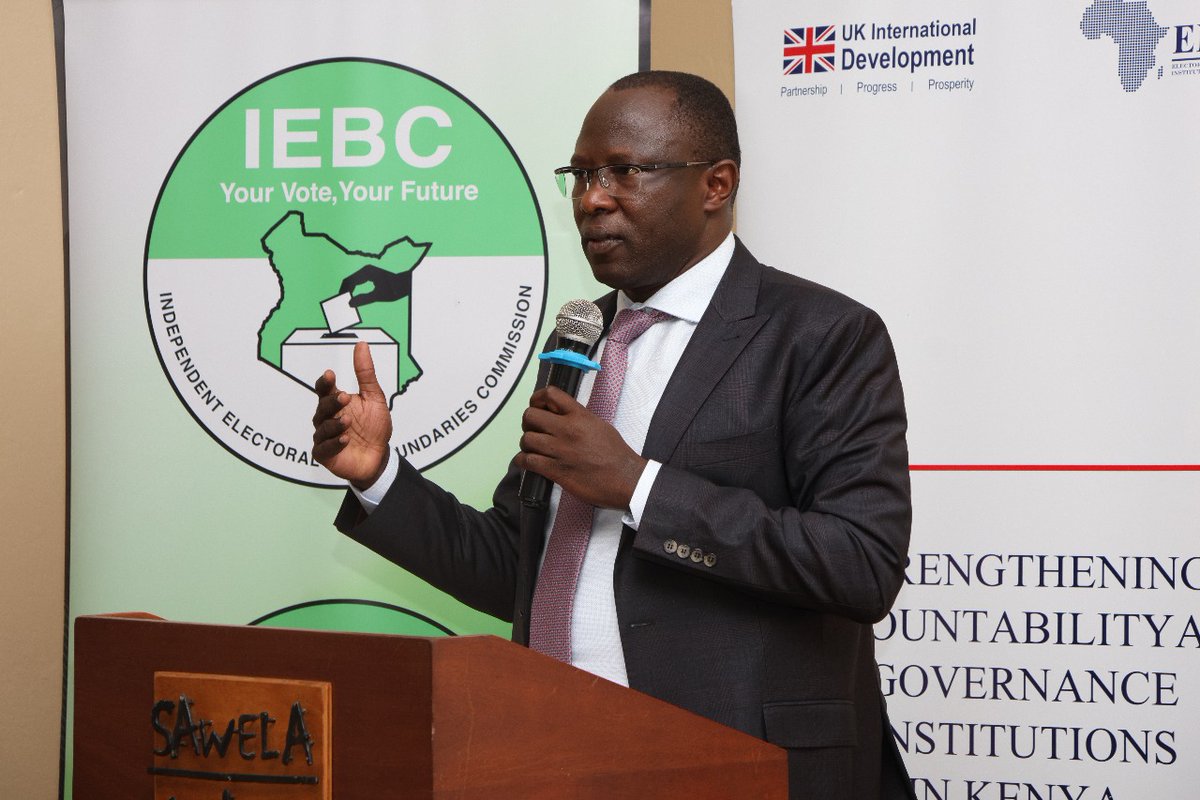
IEBC Chairperson Erastus Ethekon said the commission would not allow elections to be conducted in an atmosphere of hostility and violence.
“We cannot conduct elections in an environment characterised by incitement, division and violence,” Ethekon said, adding that the IEBC will gazette the official electoral period later this month.
The fresh move is in response to the wave of political statements which has caused heated debate regarding the implementation of the laws on hate speech.
The Health Cabinet Secretary Aden Duale has recently asked the NCIC to summon DCP leader Rigathi Gachagua regarding tribal statements that have been attributed to him, citing double standards by the commission in addressing hate speech cases.
On the other hand, Mukurwe-ini Member of Parliament John Kaguchia received backlash for his call to Kenyans not to vote for President William Ruto in the upcoming 2027 General Election in a televised interview, raising queries from the government officials and law experts.
As the level of political engagement is expected to increase in the months to come, the organizations made it clear that even though the freedom of speech is constitutional, it doesn’t cover hate speech and ethnic agitation.
They committed to cooperate in order to make sure that the nation enters the 2027 General Election in a harmonious manner.