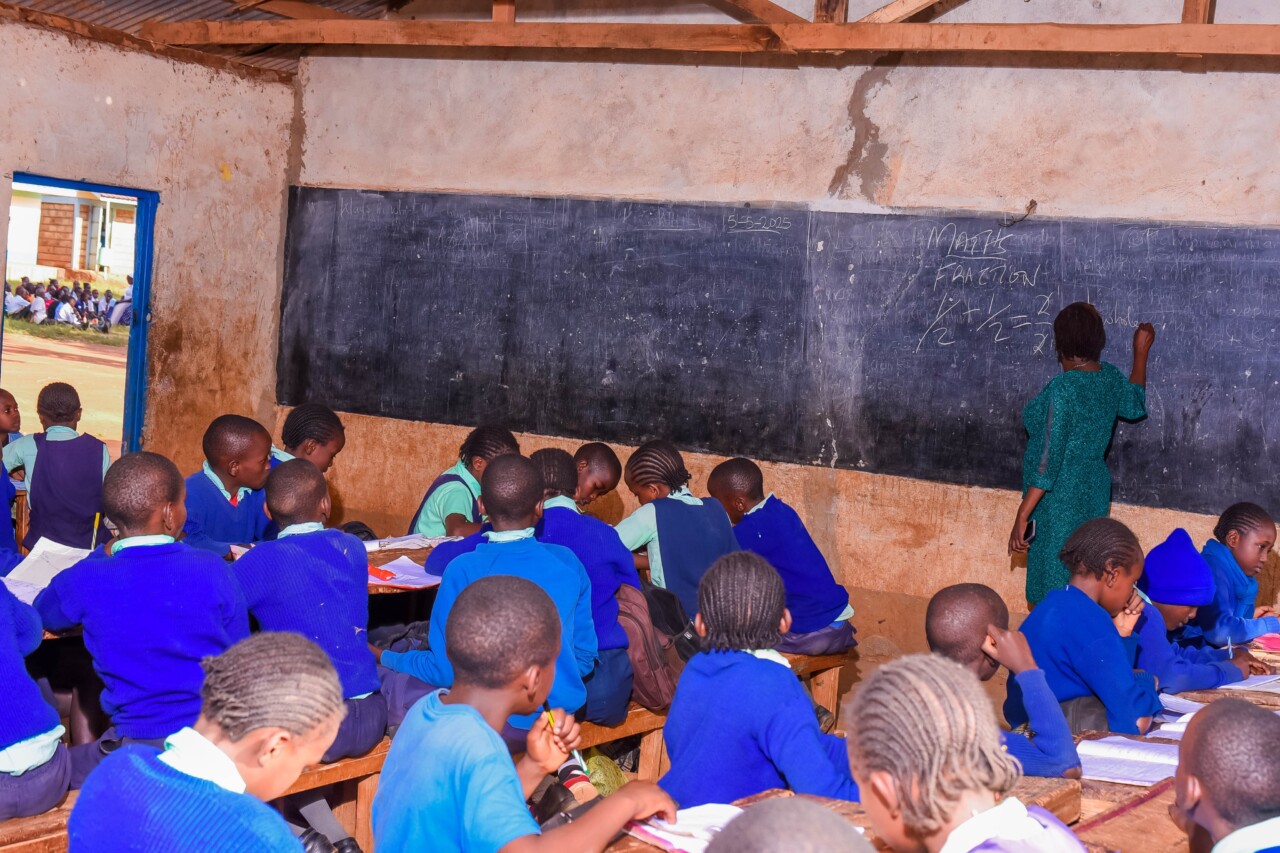
A new education survey conducted by Usawa Agenda revealed worrying trends in teenage pregnancies, gender disparities in STEM teaching, and inadequate sanitary facilities in Kenyan schools, painting a broader picture of inequalities affecting learners across the country.
The report shows that the majority of pregnant learners are in Junior School, accounting for 60 percent of all cases recorded. About one-third of the pregnant girls are in senior schools, although the figures may be understated because the survey only covered girls aged 17 and below and was conducted during school terms when many senior school girls in boarding institutions were away.
Teenage pregnancy prevalence was found to be highest in Cluster 4 schools at 4.3 percent, followed by private schools at 3.2 percent and special schools at 2.6 percent. Cluster 1 schools recorded the lowest prevalence at just 0.4 percent, while Cluster 2 schools stood at 0.8 percent.
Despite the high numbers, school return rates after delivery varied significantly across school categories. Cluster 2 schools recorded the highest return rate at 62.8 percent, followed by Cluster 4 schools at 59.8 percent and Cluster 1 schools at 56.8 percent.
According to the report, special schools and private schools had the lowest return rates at 48.6 percent and 46.5 percent respectively.The findings also expose a persistent gender imbalance in STEM teaching staff. Male teachers continue to dominate science and mathematics subjects across schools.
In girls’ senior schools, the ratio of male to female mathematics teachers is 2:1, while physics teachers stand at 3:1 in favor of men.
School infrastructure for menstrual hygiene management also remains inadequate, especially in public and refugee community primary schools. Nationally, 81.2 percent of primary schools provide sanitary towels for girls, while 65.3 percent offer disposal facilities.
However, only 27.6 percent have bath or changing room facilities.Public primary schools performed relatively better in sanitary towel provision, with 85.2 percent offering the supplies, compared to 57.5 percent of private schools and 77.8 percent of refugee community schools.
Only 25.1 percent of public schools provide bath or changing rooms for girls, compared to 42 percent of private schools.The survey further highlights disparities in the structure and sponsorship of senior schools in Kenya.
Mixed schools dominate the education landscape, accounting for 76 percent of all senior schools, while girls’ schools make up 14 percent and boys’ schools 9 percent.
Senior boys’ schools were found to be generally older and more established than girls’ schools. Seven in ten boys’ schools have existed for more than 30 years, compared to only three in ten girls’ schools. Fewer than two in ten mixed schools have operated for over three decades.
Religious institutions remain the leading sponsors of senior schools, backing seven in ten public senior schools nationwide. Sponsorship is especially common among girls’ schools, where eight in ten are church-sponsored, compared to six in ten boys’ schools and seven in ten mixed schools.
The report also indicates that boys’ senior schools generally have more STEM teachers, including mathematics and science instructors, than girls’ and mixed schools, further raising concerns over unequal access to quality science education for female learners.