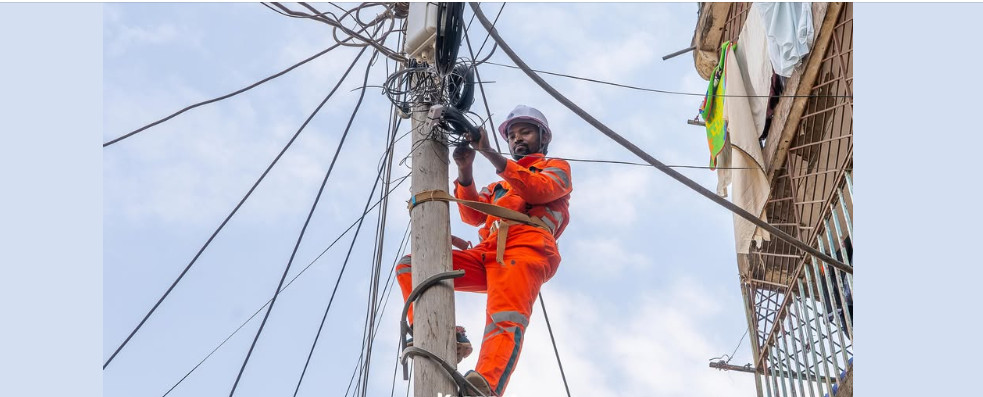
The Communications Authority of Kenya has moved to tighten how internet cables are installed across the country, following rising complaints from Kenyans over messy wiring, slow connections and frequent outages.
In a notice issued on Monday, May 4, the regulator invited members of the public to give their views on new guidelines that could change how internet service providers (ISPs) set up their infrastructure outside homes and offices.
The authority says many of the problems people face with internet are not just about bundles or routers, but how the cables are laid in estates and along streets.
“The connection to the internet does not start from your mobile phone, but rather the cables lying near your home or workplace,” stated the expert, noting that some of the installations are done carelessly, causing poor signals, disruptions, and even hazardous situations.
It is a widespread phenomenon around Kenya’s urban centers to find loose fiber optic cables lying on telephone poles, building walls, and even on the ground. Many people have always complained about the risk posed by these cables, particularly during rainy seasons when vehicles pull them down.
These new guidelines will regulate the disorder by creating national standards for telecommunication cable design, installation, identification, and maintenance.
If adopted, contractors will be required to be licensed, and all installation plans will have to be approved before any work begins. Service providers will also be expected to submit their cable routes within 30 days after completing installations.
The guidelines go further into the details. For instance, cables laid underground in urban areas will have to be buried at least 600 millimetres deep, with inspection points placed at regular intervals. Operators will also be required to label their infrastructure clearly to avoid confusion and ease maintenance.
To reduce the constant digging of roads, the authority is pushing for better coordination between internet providers and other infrastructure projects such as roads, rail and power lines. There is also a strong push to reduce the use of overhead cables, which have become a common sight in many neighbourhoods.
For fibre mounted on poles, the rules will require strict safety standards developed together with the Energy and Petroleum Regulatory Authority and power companies.
The proposals also touch on new buildings. Under the planned Building Code 2025, developers will be required to include internet ducts and internal wiring systems from the start, ensuring homes are ready for broadband without the need for later modifications.
The authority says the changes are meant to improve safety, ensure reliable internet, and promote sharing of infrastructure among providers to cut costs and reduce duplication.
Kenyans have until May 20 to review the proposals and submit their feedback. If approved, the new rules are expected to take effect from July 1, 2026, after being published in the Kenya Gazette.