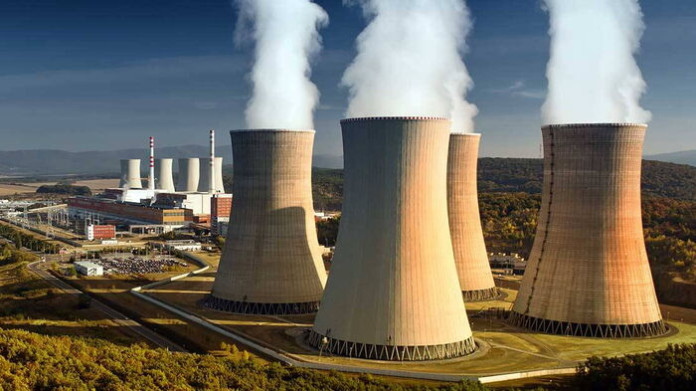
The government has outlined how it will fund its intended KSh 500 billion nuclear power facility located in Siaya County. According to State officials, the government will not be solely responsible for financing this entire project. Rather, it is intended to be developed as part of a collaborative or partnership effort and will attract both public & private sector investments through a model called Public Private Partnerships (PPP).
In his address to the Nuclear Energy Forum Conference held in Nairobi, the Director General of PPP, Kefa Seda, stated that they were exploring all avenues for financial support to make the nuclear project feasible.
He stated that the money would be channeled from various sources, including the private sector and other financial institutions, and this would help to alleviate pressure from taxpayers while the project would still be completed.
Mr. Seda stated that the majority of the energy produced in the country comes from clean sources such as hydroelectric power, wind energy, solar energy, and geothermal energy.
However, he explained further that owing to the expansion of the use of energy across the country, there is a need for a constant source of energy that cannot be interfered with by weather changes, but he is sure that the use of nuclear energy will help to bridge the gap.
He further stated that most of the current energy sources have limitations, such as hydroelectric power depending on rainfalls, wind power depending on environmental factors, and geothermal power being costly to develop.
Currently, the government has proposed a plan to build a nuclear power plant as part of its plan for future energy requirements which would keep pace with the needs of the economy.
The success of this project would depend on the commitment of all parties involved, including the government, investors, and other stakeholders.
Furthermore, Seda explained that having reliable and cost-effective energy would greatly influence how fast the country would grow and prosper as a whole.
The project is expected to begin as early as 2028, and power generation is expected to begin in 2035.
Unlike other forms of energy, although it would require more capital expenditures for building, operating, and maintaining, including workforce management, it would also require more stringent management compared to other forms of energy