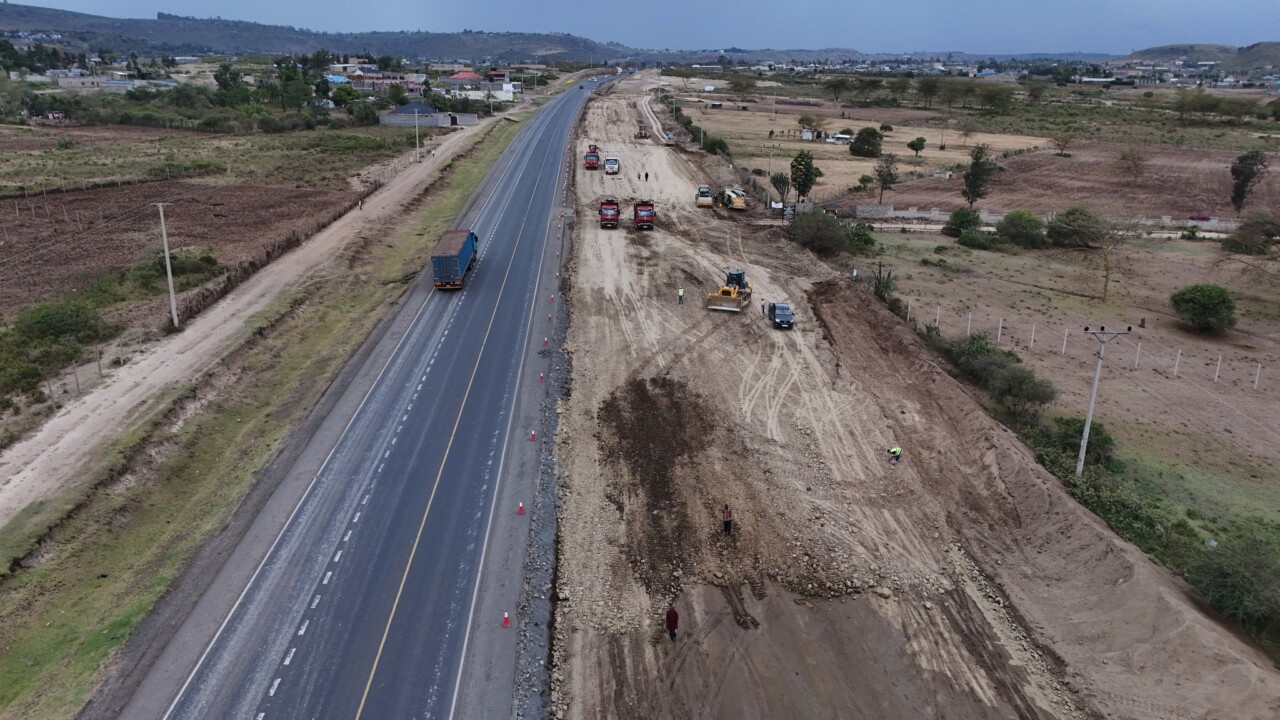
The upgrade of the Rironi–Naivasha–Gilgil (A8) and Rironi–Maai Mahiu–Naivasha (A8 South) roads launched by President William Ruto is set to transform one of Kenya’s most strategic transport corridors, enhancing connectivity, easing congestion, and supporting economic growth across the Rift Valley.
On Tuesday, Interior Principal Secretary Raymond Omollo confirmed that the 81-kilometre Rironi–Gilgil section, managed by the Kenya National Highways Authority, is expected to be completed by mid-2026, while the full 139-kilometre corridors are scheduled for completion by April 2027.
“Launched in November 2025, this project is a game-changer for Kenya’s Northern Corridor. Once complete, it will ease traffic congestion, improve safety, and boost trade for businesses across the Rift Valley and beyond,” PS Omollo said.

The project involves upgrading the two routes into four- to six-lane dual carriageways, starting from Rironi in Kiambu County and branching across the Rift Valley to Nakuru and onward to Western Kenya.
The modern highways will include interchanges, dedicated truck lanes, pedestrian bridges, and intelligent traffic management systems, targeting notorious congestion points such as Salgaa and gridlocks at Rironi.
The upgrades aim to improve road safety, reduce travel times, and enhance overall traffic flow along the Northern Corridor.
Beyond transport, the roads carry significant economic benefits. The corridor passes through key agricultural zones, enabling faster movement of fresh produce to Nairobi and other markets while reducing post-harvest losses.
The improved highway will also facilitate smoother cargo transport to Uganda, Rwanda, and the Democratic Republic of Congo, strengthening Kenya’s role as a regional logistics hub.
The project has already generated thousands of direct and indirect jobs and prioritises the use of locally sourced materials such as sand, gravel, and cement, boosting local economies along the corridor.
With an estimated total cost of KSh170 billion, the Mau Summit highway expansion is implemented under a Public-Private Partnership (PPP) model, allowing private investors to participate in construction, operation, and maintenance, while easing the government’s financial burden.
When completed, the upgraded roads will not only improve transport and trade but also serve as a model for modern infrastructure development in Kenya, connecting major towns, enhancing regional trade, and supporting economic growth in the Rift Valley and beyond.