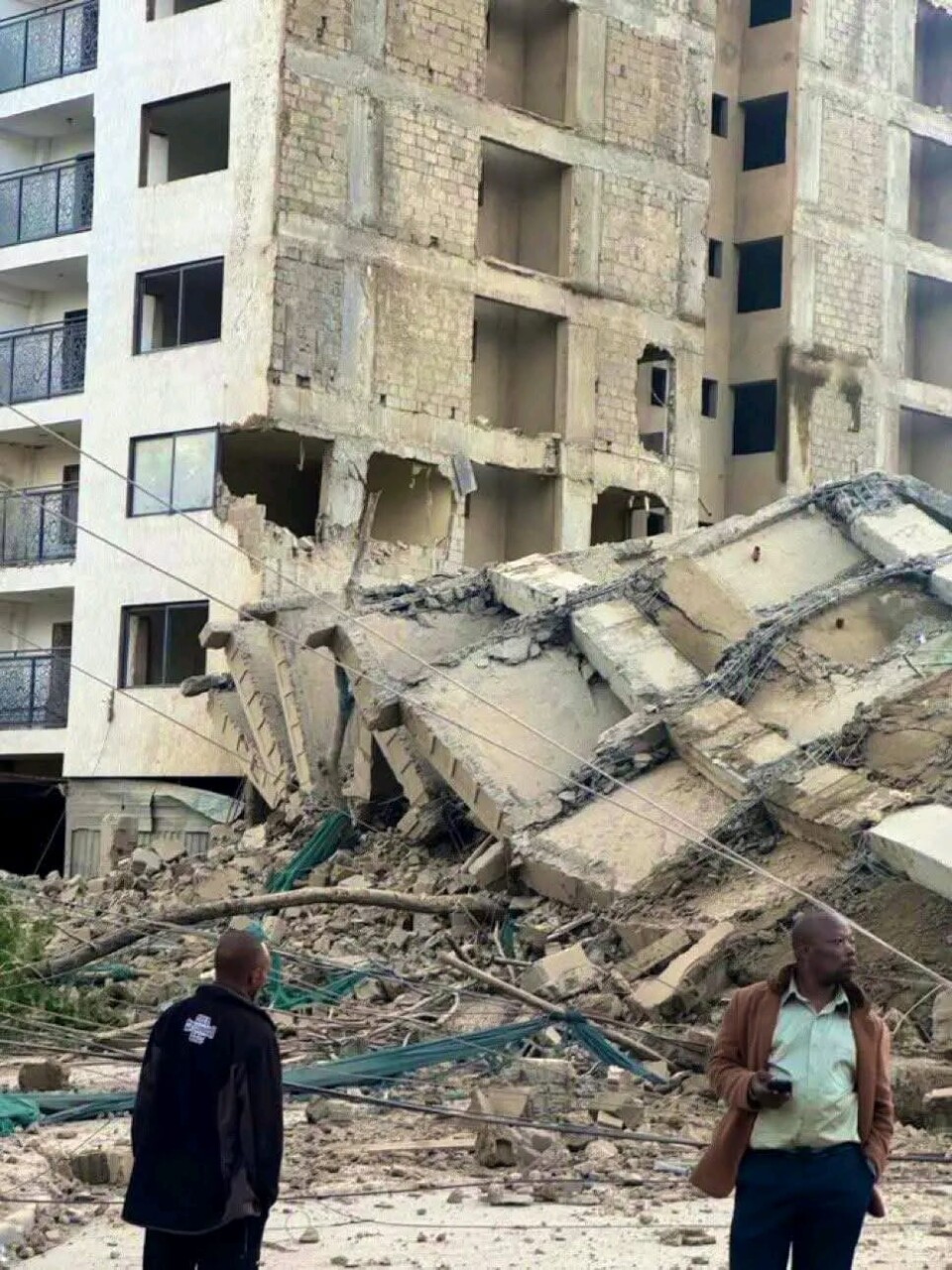
The collapse of a 14-storey residential building in Nairobi’s South C estate has once again exposed deep cracks in the county’s construction oversight system, drawing sharp comparisons with the 2019 Precious Talent Academy tragedy that killed eight pupils and prompted decisive action by then Governor Mike Sonko.
On Sunday, rescue teams recovered one body from the rubble, three days after the building pancaked and collapsed on Friday morning. Officials said the search was continuing for a second body believed to be trapped beneath the debris.
The recovery, carried out at about 1.30pm on January 4, marked the third day of a multi-agency rescue operation involving the Nairobi County Government, the Disaster Management Unit, Kenya Red Cross, police and other emergency services.
Preliminary findings indicate the structure suffered a pancake-type failure.
Investigations have been launched by several agencies, including the National Disaster Management Unit (NDMU), National Police Service, National Construction Authority (NCA), National Building Inspectorate, Engineers Board of Kenya (EBK), BORAQS, NEMA and Nairobi City County Government.
Police have already questioned the developer and several county officials over the approval and inspection process. Investigators say the developer claimed the building had already been sold to prospective buyers, raising further concerns about compliance and accountability.
As pressure mounts, Nairobi Governor Johnson Sakaja has defended his administration, arguing that counties lack adequate enforcement and prosecutorial powers to rein in rogue developers. Speaking after visiting the scene on Sunday, Sakaja said weak penalties often undermine enforcement efforts.
“Once a developer gets statutory approvals, sometimes when there are infractions, the charges get dropped, or they get a Sh20,000 fine,” Sakaja said.He added that the county had flagged the building at least three times in 2025 over violations, including exceeding approved floors and resisting inspections.
Sakaja’s stance, however, contrasts sharply with the response of former Governor Mike Sonko following the 2019 collapse of a classroom block at Precious Talent Academy in Dagoretti, which killed eight pupils.
In that case, Sonko moved swiftly, suspending all officials implicated in the approval and inspection process within the Urban Planning Department to pave the way for investigations.
At the time, Sonko suspended 16 senior county officials, among them then Finance Executive Charles Kerich and Health Executive Mohammed Dagane, citing entrenched impunity within the county’s planning systems.
He blamed “rogue officials” for facilitating illegal structures and vowed to restore order in the sector.
“I am convinced beyond doubt that drastic measures have to be taken to reverse the effects of years of flouting Physical Planning Regulations and restore order and sanity, before illegal structures claim more lives,” Sonko said then.The unfolding South C tragedy has revived public debate over accountability at City Hall, with critics questioning why similar administrative action has not been taken despite evidence that county officers approved and repeatedly flagged the now-collapsed building.
As investigations continue, the comparison between the two incidents underscores a broader question: whether Nairobi’s leadership has the political will to hold its own officers accountable when oversight failures turn fatal.