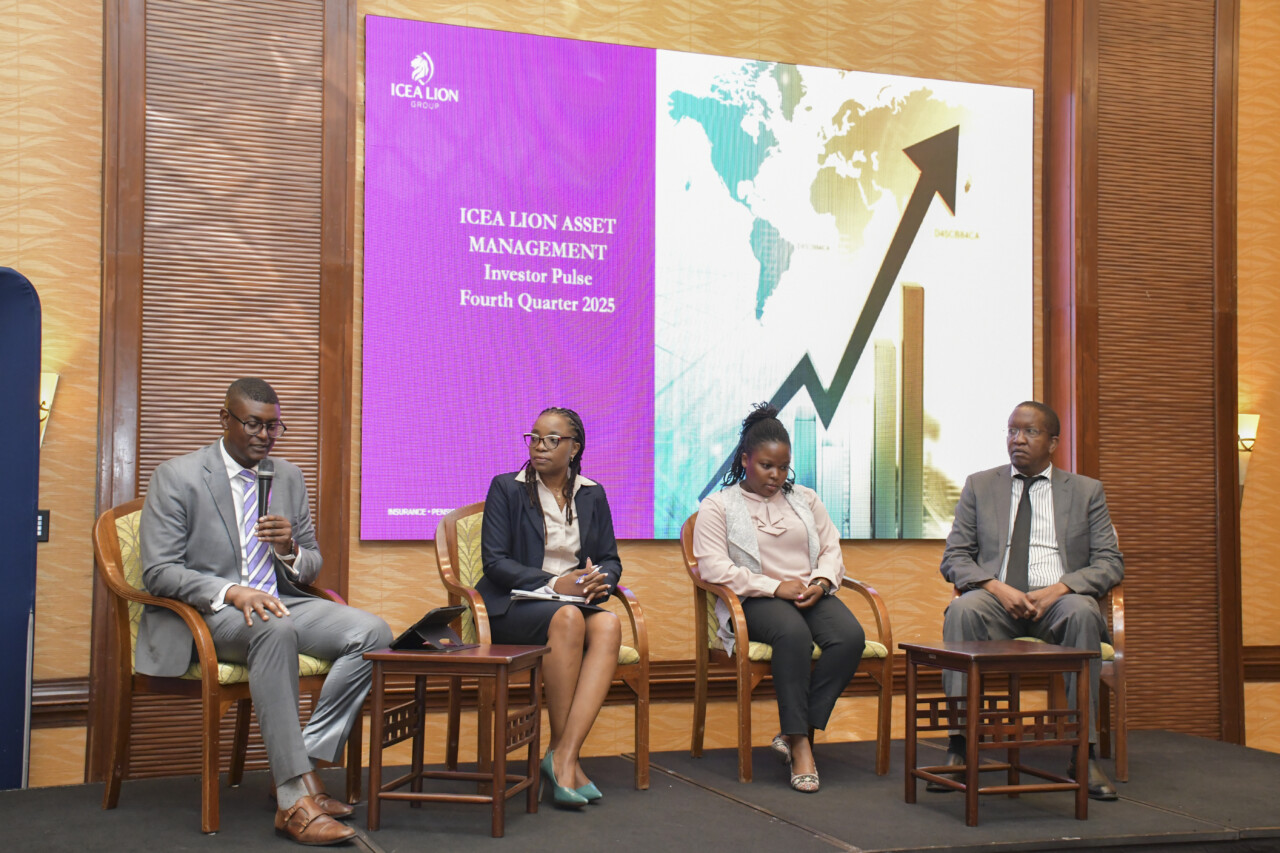
Kenya’s economy is showing encouraging signs of improved spending quality and financial discipline, according to new findings from the ICEA LION Asset Management (ILAM) Q4 2025 Investor Pulse and the Q3 2025 Consumer Spending Index, released on Monday.
The reports highlight a gradual shift in consumer behaviour, improved investment patterns, and stronger market fundamentals, signalling enhanced efficiency in how Kenyans are earning, spending, and investing.
Speaking during the launch, Gerald Gondo, Group Chief Investment Officer at ICEA LION Group, said the findings reflect a maturing economy that is balancing consumption growth with long-term financial prudence.
“Monetary stability and disciplined fiscal management are creating a rare window for investors to focus on quality—both in public spending and private investment decisions,” Gondo said.
Findings from the ILAM Consumer Spending Index—which surveyed 1,200 consumers and 200 retail businesses—indicate that spending growth in Kenya is being driven by increased purchases rather than price inflation. One-third of respondents reported higher spending due to more purchases, compared to just one-quarter in the previous quarter.
Moreover, the proportion of income allocated to savings, investments, and insurance increased marginally, reflecting growing financial literacy and better money management among Kenyan households. SACCOs, commercial banks, and chamas remain the preferred vehicles for these investments.
“The improvement in spending quality shows that Kenyans are not just spending more—they are spending smarter,” said Judd Murigi, Head of Research at ICEA LION Asset Management.
“Households are striking a better balance between consumption, savings, and investment, which is critical for long-term economic resilience.”Resilient Growth Amid Policy Credibility Kenya’s economy remains on a steady growth path, with GDP projected to expand by 5.2% in 2025, buoyed by a recovery in agriculture, a robust services sector, and improving credit access.
The Central Bank of Kenya’s decision to cut the base rate to 9.25%—with inflation contained at 4.6%—has boosted confidence in the country’s policy framework.
Gondo noted that Kenya’s disciplined monetary stance and policy independence have helped sustain foreign investor confidence and currency stability. In 2025, CBK Governor Kamau Thugge was awarded an “A” rating by Global Finance Magazine for his leadership in inflation management and exchange rate stability.
This credibility has strengthened the Nairobi Securities Exchange (NSE), which continues to record strong performance driven by renewed local and foreign demand. “Currency stability and lower fixed-income yields are encouraging investors to reallocate capital into equities and alternative assets,” Gondo added.
The consumer index shows a rebound in retail sales, with more than 60% of businesses reporting higher sales between June and September compared to the same period in 2024. Importantly, these gains were largely driven by increased customer numbers rather than price hikes, suggesting healthier demand.
Among urban centres, Nakuru and Mombasa recorded the strongest sales growth, while Nyeri had the highest proportion of businesses reporting lower sales.
At the income level, the upper-middle and high-income segments reported the biggest gains, while low-income households continued to face stagnation. Half of respondents said their income remained flat compared to the same quarter in 2024—the highest level of stagnant income recorded this year.
The findings suggest that Kenya is entering a phase of qualitative economic growth, where spending, investment, and consumption decisions are increasingly guided by value rather than volume.
With monetary stability, improved consumer sentiment, and a deepening financial culture, analysts say Kenya is moving toward a more balanced and sustainable economic model—anchored not only on growth, but on the quality of spending that drives it.