The Kenyan government is turning to the World Bank for support as it races to revive and expand some of the country’s most critical infrastructure from modernising Jomo Kenyatta International Airport (JKIA) to building major highways across western Kenya.
Transport Cabinet Secretary Davis Chirchir confirmed Tuesday that his ministry had held talks with senior officials from the World Bank, with the goal of unlocking funding for several major projects that have either stalled or struggled to take off due to budget constraints.
“We’re in a tight spot financially, but that doesn’t mean the work stops,” Chirchir said after the meeting. “We’re exploring all avenues to ensure our infrastructure keeps up with the demands of our economy and population.”
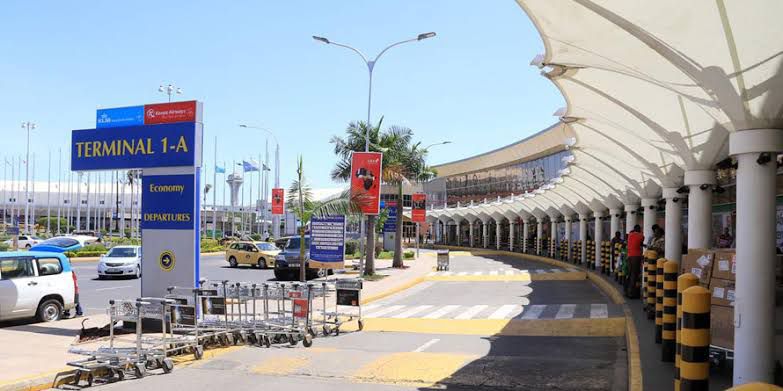
At the centre of the discussions was JKIA Kenya’s busiest airport and the primary international gateway. The airport has long been in need of a facelift, with outdated facilities straining to handle the rising volume of travellers and cargo.
A previous attempt to upgrade JKIA through a Public-Private Partnership (PPP) deal with India’s Adani Group collapsed last November.
Since then, the government has been looking for alternative funding partners and seems to be doubling down on international lenders like the World Bank.
During the meeting, the World Bank delegation led by Binyam Reja, the Eastern and Southern Africa regional transport lead also expressed interest in funding the extension of the Standard Gauge Railway (SGR) to Malaba.
The extension is considered a strategic link for cross-border trade with Uganda as well as other regional partners.
The government has been engaged in a little bit of international charm offensive over the past few months, trying to raise money for the next phase of the railway.
There has not yet been a large funding deal agreed but Chirchir insists that momentum is gathering.
Beyond the high-profile national schemes, the talks also centered on rural links which often gets overlooked but has huge implications for local economies.
Among the projects featured in the news headlines was the proposed Lake Victoria Ring Road a 180km road to connect five lakefront counties: Busia, Siaya, Kisumu, Homa Bay, and Migori.
The highway will cost an estimated Ksh70 billion, according to the Kenya National Highways Authority (KeNHA).
It will have a wide carriageway for motor traffic and dedicated space for non-motorised traffic an allusion to the functional realities of rural transport in the area.
In the towns and trading centers along the route, the scheme also includes footpaths and drainage to deal with periodic flooding utilitarian elements that imply more people-centered infrastructure.
“These aren’t just projects on a map,” Chirchir noted. “They’re lifelines for communities connecting farmers to markets, kids to schools, and patients to hospitals. That’s the real impact.”
If successful, the talks could see billions in new funding directed toward Kenya’s transport sector a sector that Chirchir described as “central to our development story.”
In a region where infrastructure often defines economic opportunity, Kenya is hoping that a mix of international partnerships and strategic planning can help close long-standing gaps and lay down the roads, railways, and runways for its next chapter.