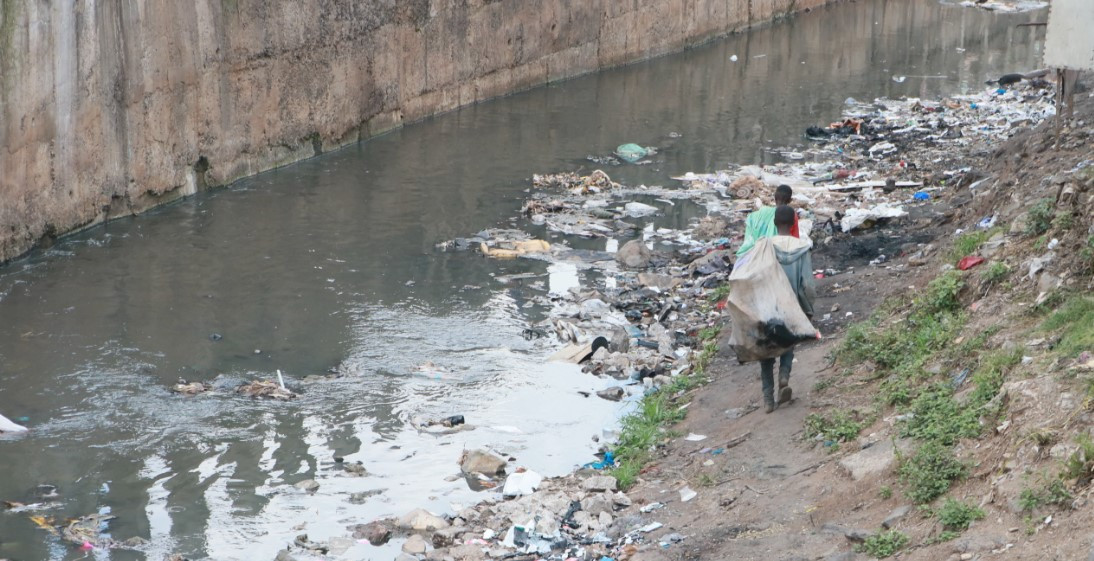
The government has stepped up efforts to deal with pollution along the Nairobi River, with Environment Cabinet Secretary Deborah Barasa warning that tough action will now be taken against offenders.
In a statement after inspecting sections of the river, the CS said she has directed the National Environment Management Authority (NEMA) to enforce environmental laws strictly, targeting industries and facilities that continue to pollute waterways.
She warned that any company found breaking the law, especially those operating without proper systems to treat waste, will face immediate action, including closure.
The CS said the government is taking a zero-tolerance approach, adding that the days of ignoring environmental rules are over.
As was seen during the inspection, conducted by the representatives of NEMA, various industrial locations have been inspected to verify their adherence to environmental standards and prevent them from contaminating the river.
The situation concerning the Nairobi River has escalated to such a level that it should be considered a matter of public health rather than solely an environmental one. This is based on the evidence given by the CS, according to which the current pollution level in the river is very high due to numerous contaminants such as industrial waste, sewage, and storm water.
The CS also noted that up to 70% of wastewater generated in Nairobi ends up in the environment without any treatment measures.
Additionally, the fight against illegal burning and waste segregation are priorities, as the Sustainable Waste Management Act 2022 demands. As far as the producers’ responsibilities for the produced waste are concerned, industries have to take care of them using the program called Extended Producer Responsibility.
She added that it is necessary to conserve the river banks, noting that it is vital to maintain an appropriate distance along the riparian zones in flood management and natural filtration of water.
According to the CS, the government will now focus on actions as opposed to just talking about environmental conservation, which she described as a responsibility of everyone.
“Environmental compliance is not a choice. It is a legal and moral obligation,” she said.