Hospitals could face fines of up to KSh3 million for demanding upfront payments before providing emergency treatment under proposed changes to Kenya’s health laws.
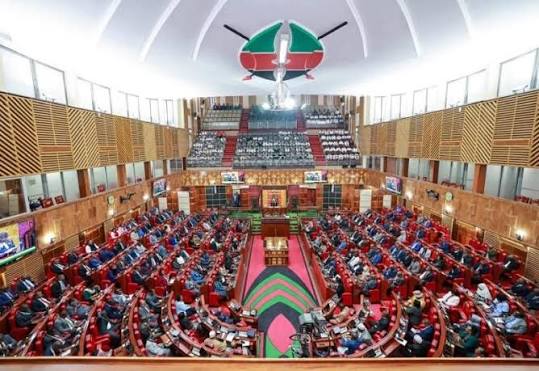
The penalty is contained in the Health (Amendment) Bill, 2024, sponsored by Kirinyaga Woman Representative Jane Njeri Maina, which was passed by the National Assembly on Wednesday, November 11, 2026.
The Bill also seeks to stop hospitals from detaining discharged patients or withholding bodies of deceased persons over unpaid medical bills.
Under the proposed amendments, a person in charge of a public health facility who demands or permits demands for prospective medical or admission fees before providing emergency treatment commits an offence.
The Bill proposes a fine not exceeding KSh3 million upon conviction.
The changes seek to ensure patients in critical condition receive immediate medical attention without first being required to raise money or pay a deposit.
Another provision seeks to end the detention of patients who have been medically discharged but cannot settle their hospital bills.
Hospitals will also be prohibited from withholding bodies of deceased patients to force families to clear outstanding medical expenses.
A person in charge of a public health facility who detains or permits the detention of a deceased person’s body to enforce payment would face a fine of up to KSh2 million.
During debate on the Bill in February 2026, Maina highlighted cases of families who had struggled to bury their loved ones because of unpaid hospital bills.
She cited the case of a woman whose body was reportedly detained at Mater Hospital for more than two months over a KSh3.3 million bill.
The legislator also recalled the case of Kelvin, a former medical student who died in a road accident but whose body was held at a funeral home for close to a year over an outstanding hospital bill of approximately KSh1.2 million.
Maina argued that hospitals should pursue outstanding debts through lawful means rather than detaining patients or bodies.
She said the proposed amendments would give effect to the constitutional right to emergency medical treatment under Article 43(2) and protect the right to human dignity under Article 28.
The Bill also seeks to expand emergency medical treatment to cover care provided at the scene of an incident, during transportation to a health facility and through early inpatient care.
Following its passage in the National Assembly, the Bill will proceed to the Senate for consideration before being forwarded to President William Ruto for assent.
If enacted, the proposed changes would strengthen protections for patients and families facing financial difficulties while seeking medical services.