The Ministry of Health is stepping up efforts to improve eye, ear and hearing services as Kenya pushes ahead with its Universal Health Coverage (UHC) programme.
The ministry said about 200,000 Kenyans are blind, while 1.5 million people live with significant visual impairment. A further 9.6 million are affected by uncorrected refractive errors.
The ministry noted that up to 80 per cent of visual impairment can be prevented or treated if people get the right care on time.
Kenya also recorded 837,416 cases of ear disease in 2022, with children below five years accounting for 264,789 of the cases.
The figures have highlighted the need to improve access to screening and treatment, particularly at the primary healthcare level.
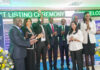
The Vision Impact Scale-Up Project, launched in Mombasa, will support eye, ear and hearing services in Mombasa, Nakuru and Kakamega counties.
The project is funded by CBM and the German Federal Ministry for Economic Cooperation and Development and is expected to reach more than 1.27 million people through communities, schools and health facilities.
It will focus on screening, referrals, treatment and follow-up care, while also supporting health workers, improving infrastructure and introducing digital systems to track patients.
The project will also strengthen county health systems to improve the delivery of eye, ear and hearing services.
Director of Curative and Nursing Services Dr Andrew Toro said on Monday, September 21, 2026, that the project would help ensure that screening is followed by treatment, rehabilitation and continued care.
The initiative comes as the Ministry of Health continues to expand primary healthcare services across the country.
The ministry has established 315 Primary Care Networks and deployed 107,831 equipped and digitised Community Health Promoters.
Routine health screening has also been integrated into school health services, while the government is developing Kenya’s first National Healthcare Referral Policy.
Speaking during the launch, CBM Director for Inclusive Health Dr Babar Qureshi called for stronger delivery of eye, ear and hearing services at primary, secondary and tertiary levels of care.