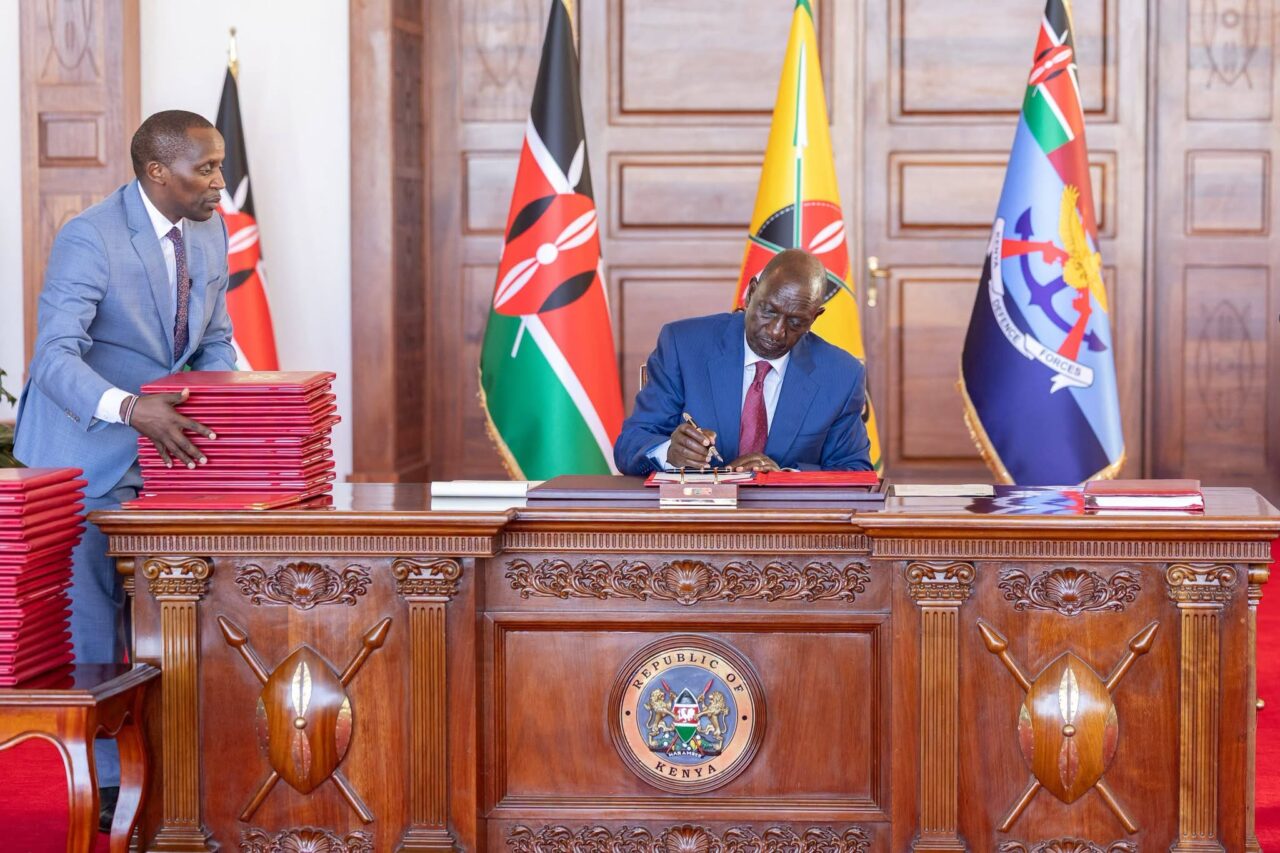
President William Ruto has assented to six National Assembly Bills at State House, Nairobi, introducing new legal protections for breastfeeding mothers, strengthening safeguards against sexual violence and reforming public service pension administration.
In a statement following the signing ceremony, Ruto highlighted the Breastfeeding Mothers Bill, 2024, and the Sexual Offences (Amendment) Bill, 2023, as key pieces of legislation aimed at protecting women and girls while improving access to justice.
The Breastfeeding Mothers Bill, 2024, seeks to improve child nutrition and maternal health by requiring employers to provide appropriate facilities and arrangements for women who breastfeed while at work.
Under the law, employers will be required to establish clean, private and properly equipped lactation spaces where mothers can breastfeed or express breast milk. It also provides for reasonable breastfeeding breaks and flexible working arrangements while protecting women against discrimination related to maternity.
Ruto said the law would help eliminate workplace barriers faced by breastfeeding mothers while improving workforce stability and productivity. He directed State House to lead by example by establishing safe, private and comfortable breastfeeding spaces for mothers visiting or working at the institution.
“I direct State House to take the lead in implementing this law by providing safe, private and comfortable spaces where mothers can breastfeed their babies,” Ruto said.
How the new Sexual Offences Law will protect women, girls
The Sexual Offences (Amendment) Bill, 2023, introduces measures to strengthen the prevention and reporting of sexual offences while improving the protection of victims. The legislation provides for nationwide public education and awareness campaigns on sexual offences and safeguards the right to education of survivors, including girls affected by teenage pregnancies.
It also introduces timelines for the determination of sexual offence cases, requiring them to be heard through the formal judicial system and concluded within six months from the date of plea. Additionally, the law prohibits the withdrawal of sexual offence cases solely because the parties have reached an out-of-court settlement.
It also criminalises coercion, intimidation or inducement intended to force victims to withdraw complaints, seeking to prevent interference with the administration of justice.
Ruto said the measures would ensure victims receive justice without unnecessary delays or compromises. The president also assented to the Public Service Superannuation Scheme (Amendment) Bill, 2025, which reforms the administration and governance of the public service pension scheme.
The legislation re-establishes the scheme as the Public Service Superannuation Fund and expands membership to public servants employed on fixed-term contracts. It also seeks to safeguard pension contributions while introducing additional benefits, including post-retirement medical cover and mortgage facilities.
Another piece of legislation, the Environmental Professionals Institute of Kenya Bill, 2024, establishes a regulatory body to oversee the registration, licensing and regulation of environmental professionals. The institute will also be responsible for promoting professionalism and maintaining standards of practice in the environmental sector.
Ruto also signed the East African Development Bank (Amendment) Bill, 2026, which aligns the bank’s governing law with the Constitution. The amendment requires National Assembly approval and authorisation from the Controller of Budget before public funds can be disbursed to the bank, strengthening parliamentary oversight and accountability in the management of public resources.
The president’s statement outlined the details of five of the six Bills signed. It did not identify the sixth piece of legislation or provide details about its provisions.